
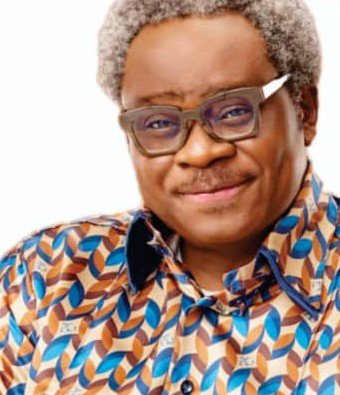
Dr Kola Adesina, Group Managing Director of Sahara Power Group—is a man whose public career has increasingly become associated with the intersection of energy, enterprise, infrastructure and Africa’s development aspirations. He is a thinker and visionary whose thoughts brought ideas together and found that anchor that could bind them in through the Sahara Group three decades ago.
From a Nigerian entrepreneurial experiment to a global energy and infrastructure force, Sahara Group’s 30-year journey offers a compelling story, with operations across Africa, Asia, Europe and the Middle East, supported by more than 6,000 professionals.
Built from Lagos across different regions, the global dimension of Sahara’s 30th anniversary is perhaps most visible in the conversations its leaders are now taking to international platforms. At fora like The Platform Africa, he continues to advocate for aggressive intrapreneurship, operational execution, and human capital transformation to unlock the continent’s economic potential. This is a story of resilience, audacity, innovation and a continuing search for solutions to Africa’s most stubborn development challenges.
At the recently concluded United Nations General Assembly (UNGA) Dr. Adesina made Africa’s presence heavily felt. At the centre of much of the UNGA’s power-sector discussion was Dr. Kola Adesina. He unfolded future-facing conversation. He led prominent discussions on scaling Africa’s climate finance, energy evolution, and digital power grids.
Africa’s most pressing challenge is expanding its productive capacity at scale. We need sustained investment in energy, infrastructure, industry, agriculture, and enterprise development to create jobs, strengthen competitiveness, and support long-term resilience
Dr Kola Adesina
He was quite concerned about climate and energy dilemma as he led prominent discussions on scaling Africa’s climate finance, energy evolution, and digital power grids. His message was direct: Africa cannot build resilient economies without substantial investment in productive capacity.
Adesina cited an estimated $277 billion annual requirement for African climate commitments against approximately $30 billion in annual climate-finance flows, highlighting the scale of the financing gap. He called for stronger mobilisation of African institutional capital, deeper local-currency financing markets, improved project preparation and greater regional collaboration.
The argument is especially compelling because Africa faces a development paradox. The continent has enormous energy resources, youthful populations, agricultural potential and expanding markets, yet millions remain without dependable electricity and infrastructure deficits continue to constrain productivity. Africa, as Adesina noted, must simultaneously finance development and protect the infrastructure, businesses, food systems and communities already exposed to climate risks.
The Sahara Group boss’ future-facing conversation also recognises that Africa’s energy transition cannot simply reproduce models designed for wealthier economies with different historical circumstances. The continent needs energy for industrialisation while confronting climate change. Sahara has therefore articulated a long-term net-zero ambition built around gas-to-power infrastructure, renewable-energy integration and nature-based solutions. Its sustainability reporting describes this as an attempt to balance energy security with climate responsibility.
This is the difficult terrain in which Africa’s energy future will be negotiated: more electricity, greater industrialisation, wider access and economic growth—while progressively reducing environmental impact. There will be no simple formula. But with a vibrant company like the Sahara Group, which has evolved into an institution, there is the possibility.
Thirty years is long enough for a business to become an institution, but for Sahara Group, the 30th anniversary is less a destination than a point of departure. Founded in 1996, Sahara has evolved from a petroleum-products trading enterprise into an international energy and infrastructure conglomerate with activities spanning upstream, midstream and downstream energy, power, infrastructure, data and technology. Its operations extend across Africa, Asia, Europe and the Middle East, supported by more than 6,000 professionals.
Perhaps the most enduring measure of Sahara’s 30-year journey will not ultimately be barrels, megawatts, pipelines or balance sheets, but people. It is its human capital dimension. The company has continued to invest in top-notch human resources over the years.
Equally, it also embarks on talent development through programmes designed to produce the next generation of professionals and leaders. Its 2026 Graduate Management Trainee initiative, for instance, is explicitly positioned as part of the Beyond XXX vision and the development of future-ready talent across the energy value chain.
That emphasis matters because Africa’s development deficit is also a capability deficit. Infrastructure requires engineers. Digital transformation requires data scientists. Energy markets require financial expertise. Climate adaptation requires innovators. Sustainable businesses require leaders capable of thinking beyond quarterly results.
Sahara’s 30th anniversary therefore arrives with a larger responsibility: to continue building institutions and people capable of sustaining the enterprise beyond individual personalities. For those following Africa’s economic fortunes, the Sahara story represents more than corporate expansion. It is part of a larger question: Can African businesses build institutions capable of solving African problems at scale while competing successfully in the global economy? Sahara’s 30-year journey offers the answer. The significance of Sahara’s evolution lies in its ability to move beyond the traditional boundaries of an energy company. Its stated ambition has increasingly been to connect energy with industrialisation, technology, infrastructure, human capital and sustainable development.
That evolution is particularly visible in power. In June 2025, Sahara Power Group, in partnership with Crescendough Nigeria Limited, commissioned the 180MW Afam II Power Plant in Rivers State. The project was conceived, managed and delivered in 16 months, with predominantly Nigerian expertise. Sahara described the facility as an important addition to the national grid and a catalyst for powering homes, businesses, industries and economic growth.
That achievement becomes more significant when viewed against Nigeria’s enduring electricity challenge.
In August this year, Sahara Power Enterprise Group commenced construction of a $12 million, 12MW Independent Power Plant at the Ogba Undertaking of Ikeja Electric in Lagos. The facility is scheduled for completion in the first quarter of 2027 and is designed to serve industrial clusters, businesses, residential communities and public institutions around Ogba, Acme Road and Wemco Road.
For Adesina, such projects are not merely engineering exercises. They are interventions in productivity. Reliable electricity means a manufacturer can plan production, a hospital can operate more consistently, a technology company can remain online and a small business can spend less of its scarce income trying to overcome unreliable energy.
Yet Adesina’s argument goes beyond generating more megawatts. It spreads over to the digital grid question. Early in May 2026, he argued that Nigeria’s electricity challenge is increasingly about how intelligently power is delivered, not simply how much electricity can be generated. He advocated the deployment of digital-grid technologies capable of providing real-time visibility, automation, data intelligence and predictive capabilities across the electricity network.
That position captures an important shift in Africa’s energy conversation. The next generation of energy infrastructure cannot depend entirely on yesterday’s architecture. Africa requires systems that combine generation with data, technology, efficient distribution, smart metering, renewable energy, storage and intelligent management.
Sahara’s own strategy reflects this direction. The company has identified data analytics, predictive maintenance and cybersecurity as components of a technology-driven transformation of the power sector.
The road ahead
Sahara’s journey has unfolded against some of Africa’s most difficult economic realities—energy poverty, infrastructure deficits, climate vulnerability, financing constraints and the challenge of transforming abundant resources into broad-based prosperity. Its participation in the Mission 300 Private Sector Council, an initiative aimed at helping connect 300 million Africans to electricity by 2030, places Sahara within a broader continental effort to mobilise private capital and expertise for energy access.
That is perhaps the most appropriate lens through which to view 30 years of Sahara. Not merely as a celebration of survival, but as a test of whether African enterprise can continue moving from transaction to transformation through innovations, from opportunity to infrastructure, and from infrastructure to human prosperity. Dr. Kola Adesina’s vision of energy as an engine of productivity, climate resilience and economic transformation fits into that larger narrative.
The next 30 years will undoubtedly be more demanding than the first. But if the first three decades established Sahara as an African-born global energy and infrastructure player, the challenge of the next era is considerably larger: to help demonstrate that Africa can finance, build, operate and sustain the systems that will power its own future. And perhaps that is the most compelling meaning of Sahara at 30—not simply that it has lasted three decades, but that it continues to ask the most important question of all: What would Africa look like if its energy, capital, technology and human potential were finally connected at scale?