
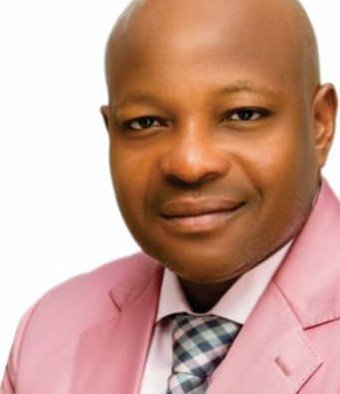
Mr Adeola Oluwatosin Ajayi, Director-General of Nigeria’s Department of State Services (DSS) is a man of calm nature, discipline, intellect and efficiency, whose conduct, patriotism and credibility match what the agency needs. And he is doing a lot as the agency performs its role as the foundation of national security and stability.
The DSS is an organization whose work is so closely tied to the survival and security of the state that much of what they do must necessarily remain outside the public gaze. Its operations involve intelligence gathering, counter-intelligence, counter-terrorism, internal security and the protection of Nigeria’s national interests. Its successes are frequently classified; its methods cannot always be publicly explained; and its officers often work in circumstances where enormous sacrifices are demanded of them without corresponding public recognition.
Yet, beneath the secrecy lies an important democratic question: how should a modern intelligence institution exercise enormous powers while preserving the rights and dignity of the citizens it is established to protect? Since his appointment as Director-General of the DSS in August 2024, Mr Oluwatosin Adeola Ajayi has increasingly placed that question at the centre of his institutional philosophy.
Yet, beneath the secrecy lies an important democratic question: how should a modern intelligence institution exercise enormous powers while preserving the rights and dignity of the citizens it is established to protect?
Mr. Ajayi’s story is important partly because he is not an outsider brought in to diagnose the DSS from a distance. He is a product of the institution. Having spent much of his professional life inside the intelligence community, he understands the demands placed on its officers, the secrecy surrounding its work and the difficult balance between protecting national security and respecting the rights of citizens.
That institutional memory appears to inform his approach. Rather than presenting reform as a rejection of the DSS’s traditional mandate, the philosophy emerging from his administration is one of refinement: preserve what works, confront what does not, and build a more professional institution around the realities of contemporary Nigeria. This is a significant distinction. For an intelligence service operating in an environment characterised by terrorism, kidnapping, violent extremism, organised crime, separatist agitations and other complex security challenges, the answer cannot simply be to reduce its powers. The challenge is to ensure that those service powers are exercised intelligently, lawfully and proportionately.
Under Ajayi, the DSS makes operational power meet the law. One of the clearest elements of the Ajayi approach is the emphasis on separating civil disputes from criminal and national-security matters. And the principle is straightforward. Not every disagreement is a security threat. Not every commercial dispute requires the intervention of an intelligence agency. And not every person accused of wrongdoing should be treated as though guilt has already been established. Where the courts are the appropriate arena, the courts should be allowed to do their work.
This philosophy has been reflected in the Service’s handling of high-profile disputes, including matters involving Professor Pat Utomi and the Socio-Economic Rights and Aaccountability Project, where judicial processes became central to resolving the issues.
For an organisation vested with coercive powers, this is more than an administrative preference. It is a constitutional principle. The authority of the state is strongest when it is exercised within the law. To Ajayi, an intelligence service that understands this distinction does not become weaker. Rather, it becomes more predictable, more professional and potentially more trusted.
Perhaps the most striking dimension of the current DSS administration is the emphasis on what Ajayi describes as restorative justice. The logic is simple. Intelligence security operations are conducted by human beings. Intelligence can be incomplete. Operational decisions can sometimes produce unintended consequences. And when an innocent citizen suffers because of an error, the institution responsible cannot simply hide behind the complexity of its mandate.
According to the DSS, more than N300million has been paid in compensation for operational errors during Ajayi’s tenure. In one case, a businessman mistakenly shot during a DSS operation received additional assistance beyond the compensation ordered by a court. His medical treatment was covered, and efforts were made to help him rebuild his livelihood. The significance does not lie merely in the financial value of the intervention. It lies in the philosophy. There is a difference between saying, “The court has ordered compensation and we have complied,” and saying, “An error occurred, a citizen suffered, and we have a responsibility to help repair the damage.”
The latter represents a different conception of aaccountability. It says that institutional responsibility does not end at the courtroom door. There is another side to aaccountability. It must apply to the people wielding state authority as much as it applies to the citizens who encounter that authority. The DSS has therefore paired its welfare initiatives with disciplinary measures against personnel accused of unethical conduct.
In November 2025, the Service announced that 115 personnel had been dismissed over a period as part of its ongoing reforms, while warning the public against individuals who continued to impersonate DSS officers after dismissal. For a secretive institution, internal discipline is not a peripheral matter. It is central to credibility. A single rogue officer can damage public confidence. A pattern of misconduct can compromise intelligence operations. And an organisation whose personnel cannot be trusted cannot expect citizens to cooperate fully with it. The emerging philosophy is therefore one of balance: better welfare, but higher standards; greater professional support, but stronger aaccountability.
Perhaps one of the least discussed aspects of national security is the person who carries it out. Intelligence officers are often discussed as instruments of the state—as operatives, analysts, investigators or security personnel. But they are also human beings. They have families. They require healthcare. They need adequate accommodation. They need modern equipment. They require professional development and an institutional environment in which their dignity is respected.
Under Ajayi, the DSS has reported investments in office buildings, staff quarters and transit accommodation, as well as improvements in medical facilities, sporting infrastructure, operational vehicles, surveillance equipment and other tools.
On the surface, these may look like ordinary administrative improvements. They are not. A poorly housed, poorly equipped or inadequately supported officer is operating under unnecessary pressure. In intelligence work, where judgement and concentration can have national consequences, welfare becomes an operational issue. Technology may improve the capacity of an intelligence service. But people operate the technology. People interpret the intelligence. People cultivate sources. People make decisions. And people ultimately determine whether an institution earns or loses public confidence.
The question of who gets an opportunity to rise within an intelligence institution also matters. In January 2025, Folashade Adekaiyaoja became the first female Deputy Director-General of the DSS. The appointment represented a significant moment in the history of the Service and demonstrated an expanding space for women at the highest levels of its professional hierarchy.
There was also the reported recruitment of 27 qualified orphans into the Service. Beyond the symbolism, the initiative reflected a wider human-capital philosophy: circumstances of birth or personal hardship should not necessarily determine the contribution an individual can make to the country. For an organisation whose effectiveness depends on the quality of its personnel, expanding the pool of capable and committed Nigerians is itself a security investment.
Some of the most consequential reforms are also the least dramatic. There is no siren when a citizen is quietly removed from an outdated security watchlist. No television cameras are present. No dramatic photograph accompanies the decision. Yet such an action can have enormous consequences for the individual involved.
In 2026, the DSS announced a review of old Watchlist Actions, including some dating back to the military era, with the stated objective of ensuring that outdated restrictions did not continue to affect citizens unnecessarily.
The Service cited the delisting of journalist Lanre Arogundade, whose removal from the watchlist was approved in May 2025 after more than a decade. The principle behind the review is compelling. An intelligence organisation must know when to place someone on a watchlist. But it must also know when circumstances have changed. Security intelligence cannot operate permanently on yesterday’s assumptions. Institutional maturity requires not only the capacity to identify threats, but also the discipline to revisit old decisions.
Perhaps nowhere has the change been more visible than in the DSS’s relationship with the media. The relationship between journalists and intelligence agencies is inherently complicated. The journalist asks questions. The intelligence officer protects information. The journalist seeks disclosure. The intelligence institution is built around confidentiality. Conflict is therefore almost inevitable. But conflict does not have to become hostility.
Under Ajayi, the DSS has increasingly promoted dialogue with the media. In December 2025, the Nigerian National Committee of the International Press Institute recognised him for his stated commitment to press freedom and respect for journalists and media organisations. In April 2026, the Broadcasting Organisations of Nigeria honoured him as “Friend of the Media.” Two months later, the Nigeria Union of Journalists recognised him as its “Man of the Year,” citing efforts to strengthen cooperation between security agencies and the media.
The awards themselves are less important than the principle they represent. A journalist who asks uncomfortable questions is not necessarily an enemy of national security. A security agency that explains its position does not necessarily compromise its secrets. The space between those two realities is where democratic dialogue takes place.
Trust is an intelligence asset. This may ultimately be the most important idea associated with Ajayi’s approach. Intelligence does not come only from surveillance systems, databases or sophisticated technology. It comes from people. Citizens see things. Communities hear things. Professional associations know things. Neighbours notice things. And when they trust an institution, they are more likely to share what they know. That makes public confidence an intelligence asset.
The equation is simple: Trust produces cooperation. Cooperation produces information. Good information improves prevention. Prevention strengthens national security. Seen from this perspective, humanitarian intervention is not merely charity. Community engagement is not merely public relations. Respect for citizens can have operational value.
From arrest to prevention seems to be gaining ground in the system today. Of course, the DSS under Ajayi has not abandoned the hard edge of its mandate. Nor should it. Nigeria requires an intelligence service capable of confronting terrorism, kidnapping, violent extremism, organised crime, arms trafficking and other threats. But the more sophisticated question is what happens before and after an arrest. Can intelligence identify a threat early? Can the Service prevent an attack rather than merely investigate its aftermath? Can evidence be properly developed? Can innocent people be protected? Can intelligence support prosecution? Can inter-agency cooperation turn isolated information into actionable security knowledge?
These questions point towards a more mature conception of intelligence. The success of an intelligence institution should not be measured only by the number of arrests it makes. It should also be measured by the threats it prevents, the innocent people it protects, the quality of intelligence it generates and the confidence it inspires.
There is no serious basis for claiming that every problem within the DSS has disappeared. Nigeria’s security environment remains difficult. Reports of alleged misconduct and controversy involving security personnel have not disappeared simply because a new reform agenda has been introduced. Reform is not perfection. It is direction.
And the direction of the Ajayi administration is visible in several areas: disciplinary measures, personnel welfare, compensation for operational mistakes, review of old watchlists, judicial processes, media engagement and a stated emphasis on human rights. Whether these measures ultimately produce lasting institutional transformation will depend on their sustainability beyond individual initiatives and personalities. That is the real test of reform.
Two years is a short period in the life of a national intelligence organization it is long enough to reveal the philosophy of its leadership. Under Ajayi, the DSS appears to be attempting something more subtle than a simple expansion of operational power.
It is about restoring dignity to personnel, aaccountability to power, legality to coercive authority, dialogue to institutional relationships and trust to the relationship between Nigeria’s intelligence service and the people it exists to protect. In an age when security institutions across the world are being asked to do more with greater scrutiny, that may prove to be one of the most consequential tests of leadership. For Adeola Oluwatosin Ajayi and the DSS, the task is still unfinished.
But the direction is unmistakable: to build an intelligence service strong enough to protect the state, disciplined enough to obey the law, professional enough to learn from its mistakes, and trusted enough for citizens to see themselves not as subjects of security—but as partners in it.